

Cataracts are as common as wrinkles. While most cataracts are found in people aged over 50, they can also occur at younger ages due to UV exposure, trauma, medication, and certain health conditions.
What are cataracts?
When the normally clear lens inside your eye becomes cloudy, this is known as a cataract. Having a cataract is like looking through a dirty window, it is a leading cause of vision impairment.
A cataract is what happens when the transparent lens you were born with starts to coagulate and turn cloudy. Your lens sits right behind your pupil, and its role is to bend light to reach your retina so that you can see clearly. For your lens to do its job properly it has to be transparent; otherwise the light won’t reach your retina and vision deteriorates.
When you have a cataract, your eye’s lens becomes too stiff, starts to coagulate, and becomes cloudy. It’s like the way an egg white starts off transparent but turns milky white as you cook it, a process called oxidative stress or protein denaturalisation. It’s a bit like looking through a dirty car windscreen that you can’t quite wipe clean.
If your world is starting to look a bit cloudy, or you are increasingly more glare-sensitive, it is important to have a comprehensive eye examination with an optometrist. If cataract is detected, your optometrist may refer you to an ophthalmologist for further examination and treatment.
How to prevent or slow down cataracts
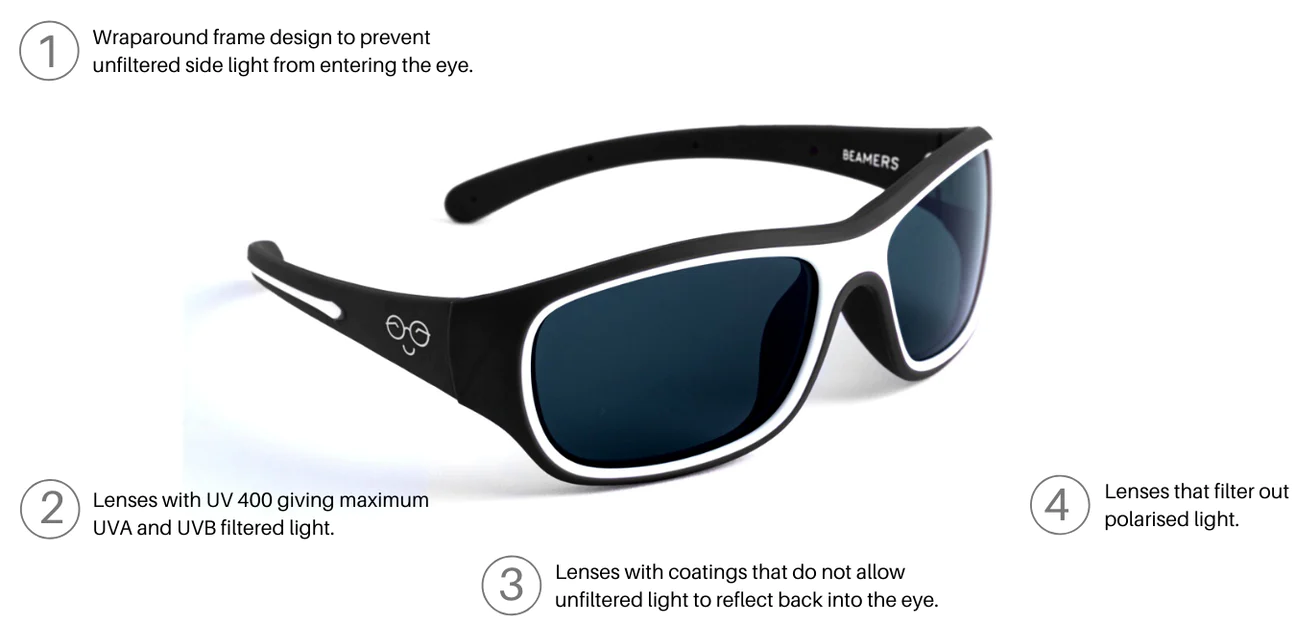
The most common causes of cataracts are age and UV light exposure. This is why proper sun protection for your eyes and maintaining good general health are great ways to slow cataract formation.
Ideal sunglass features for cataract prevention:
- Wrap frames, Flat sunglass frames do not provide the same protection as wrap frames, as they don’t protect the eyes from light entering from above and the side.
- Back surface antireflective coating, This blocks reflected light from entering the eye.
- UV400 rated lenses, Blocking 99–100% of UVA and UVB radiation.
Tips to optimise your cataract surgery outcome
When the time comes for cataract surgery, preparation makes a significant difference to the outcome:
- Stop contact lens wear 1 month prior to measurements for cataract surgery, lenses alter corneal shape, which affects the accuracy of measurements for the implant lens
- Stop eye makeup use 1 month prior to measurements for cataract surgery
- Treat dry eye (even if you have no symptoms, but your optometrist detects it) prior to surgery, uncontrolled dry eye reduces the accuracy of pre-surgical measurements
- Discuss your options for intraocular lens (IOL) implants with your optometrist, whether it be single vision, monovision, mini-monovision, extended depth of focus (EDOF), EDOF + monovision, or multifocal
- Be aware that dry eye and glare are common experiences post-surgically, but these improve over time and there are treatment options available
Bringing up cataracts at your eye examination allows us to monitor the progression over time and help you prepare, both practically and expectation-wise, for surgery when the time comes.

15 years of experience as an optometrist and owner of Carina Eye Care, experienced in prescribing the full range of myopia management options.
Written and medically reviewed by Dr Carina Trinh, BOptom · AHPRA Registered (OPT0001663121) · Optometry Australia Member · CCLSA Member · OSO Member · IOA Member.