
Myopia Management
Proactive care to slow myopia progression in children and young adults, not just a stronger prescription every year.
Is myopia really that serious?
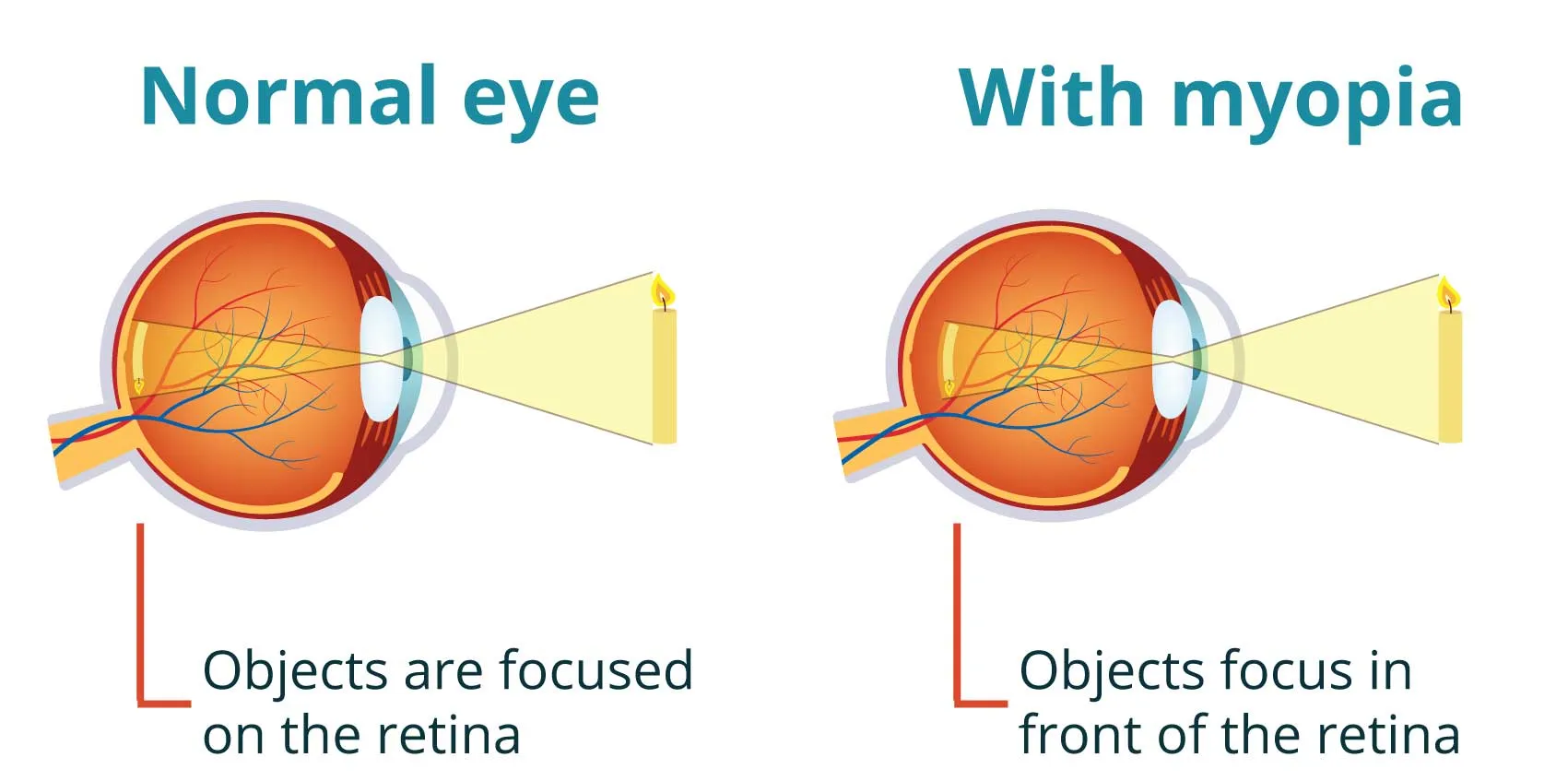
Myopia (short-sightedness) happens when the eye has too much focusing power, so light focuses just in front of the retina instead of on it. It's more than a glasses prescription. A longer eyeball carries a real, lifelong increased risk of retinal detachment, glaucoma, macular disease, and cataract.
It's also more common than most parents realise. The average age of onset has dropped from around 11 in the 1980s to about 8 today, and myopia in 12-year-olds has roughly doubled in six years. About a third of children now have myopia by the time they finish high school.
Most optometrists still default to single-vision lenses, which correct the blur but don't do anything to slow the progression. I'm one of the few practitioners in the Burwood/Strathfield area experienced in prescribing the full range of myopia management options, including NaturalVue and SEED EDOF 1 Day contact lenses, which offer a higher prescription range than most other daily disposables.
What increases the risk?
- Parents with myopia
- More close-up work and screen time
- Asian ethnicity (progression tends to be faster)
- Highly educated parents (correlated with more near work)
- Glasses prescriptions that aren't kept up to date
A quick overview
What can you do day to day?
Lifestyle habits matter alongside whichever treatment we choose. I ask families to work towards:
- Reducing screen time where practical
- Getting outdoors for around 2 hours a day (sun hat and sunglasses on), more time outdoors is one of the most consistently supported protective habits in the research
- Taking a break every 20 minutes during close-up reading or screen work, and if a break gets forgotten and 40 minutes has passed, taking a full 10 minutes off
- Reading and working in good light, not in the shadows or the dark
- Regular axial length measurements (every 3 to 6 months) to track how treatment is actually working
- 6-monthly eye examinations with an optometrist who stays current on myopia research
What can be done if your child is already myopic?
3 to 6 monthly eye exams with axial length measurements, alongside one of these proactive treatment options.
Orthokeratology (night contact lenses)
Custom overnight contact lenses that reshape the cornea while your child sleeps, so no glasses or daytime contacts are needed. One of the strongest evidence-based options available.
Read more about orthokeratology →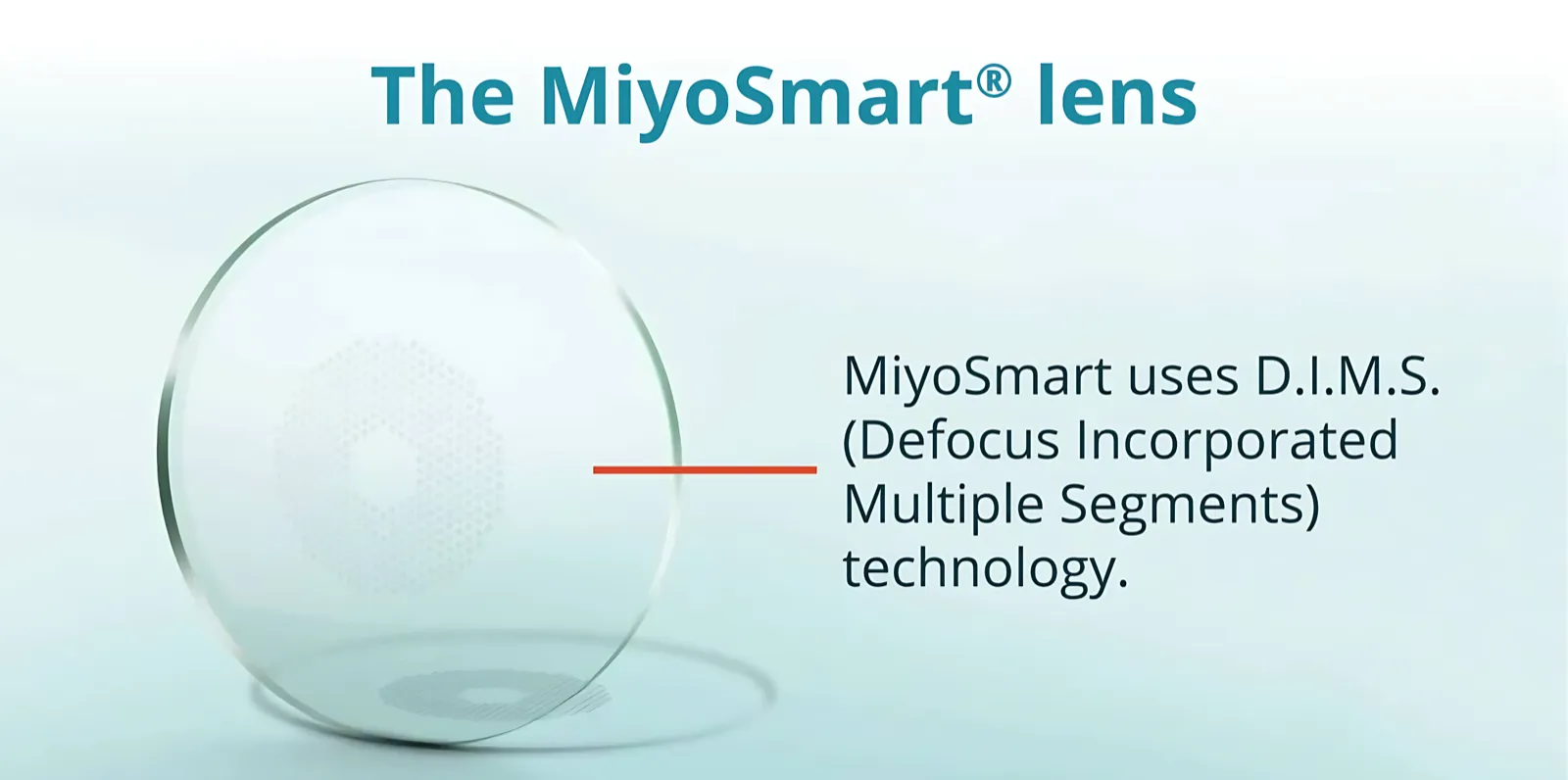
MiyoSmart spectacle lenses (Hoya D.I.M.S.)
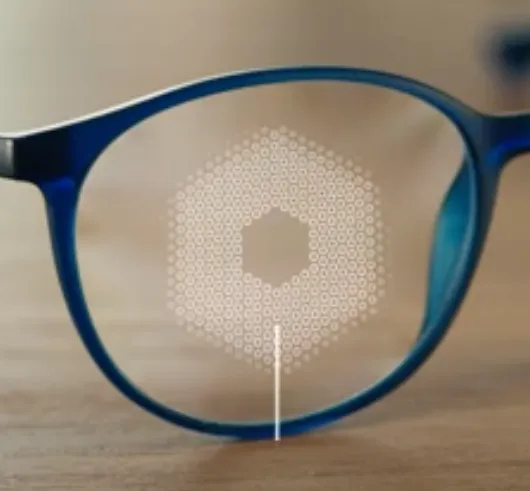
MiyoSmart was the first spectacle lens built with Defocus Incorporated Multiple Segments technology, and it's shown to be similarly effective to orthokeratology, MiSight, and low-dose atropine for slowing progression. Getting the frame fit right matters for how much of the lens area gets used properly, so I take pupillary distance and pupil height measurements myself before ordering from Hoya. I stock Tomato Glasses, NanoVista, and my own in-house Bendy Series frames for kids who need something durable and comfortable, plus designer options like Nike and Lacoste, and Leaf frames as a lightweight, colourful budget pick that a lot of kids love.
Curious how the newest version compares to Stellest 2.0? I've written up the clinical results and video comparison here.
Stellest spectacle lenses (Essilor H.A.L.T.)
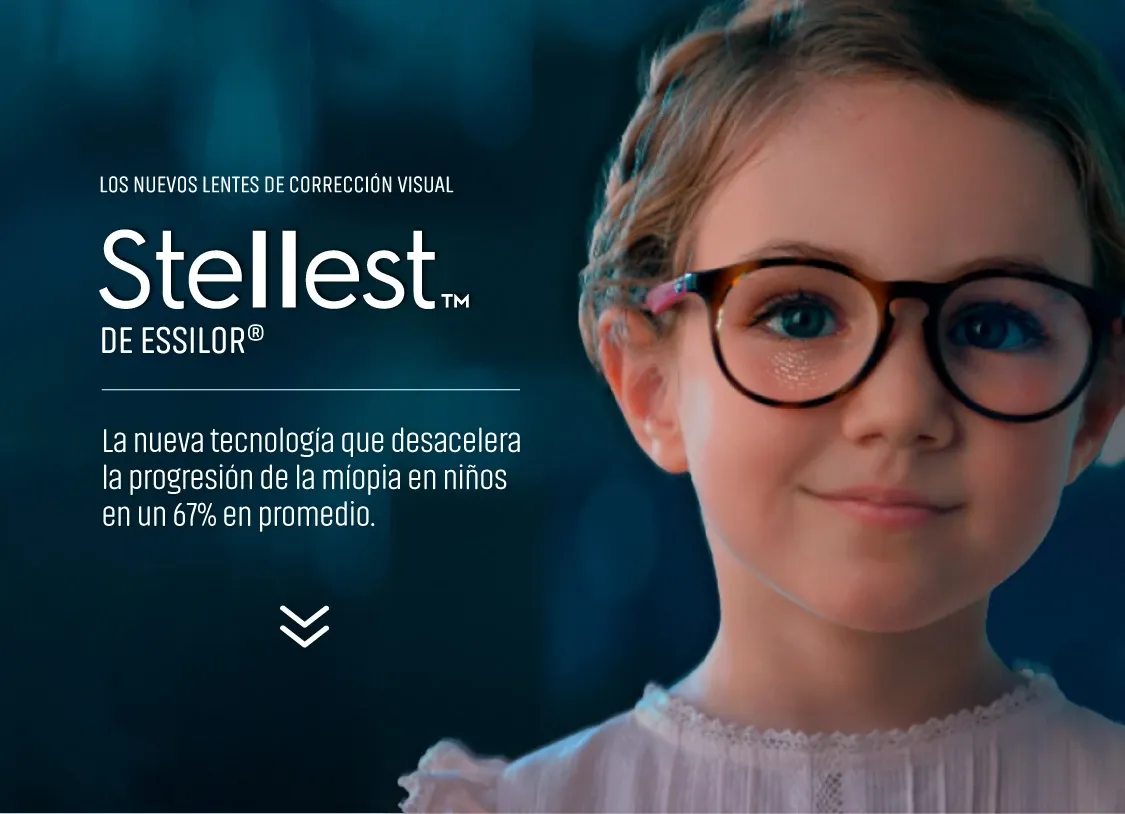
Stellest uses Highly Aspheric Lenslet Target technology across a constellation of lenslets to slow eye elongation, and is on par with MiyoSmart in effectiveness. I take the same careful pupillary and frame-fit measurements as I do for MiyoSmart. See my full Stellest vs MiyoSmart comparison if you're deciding between the two.
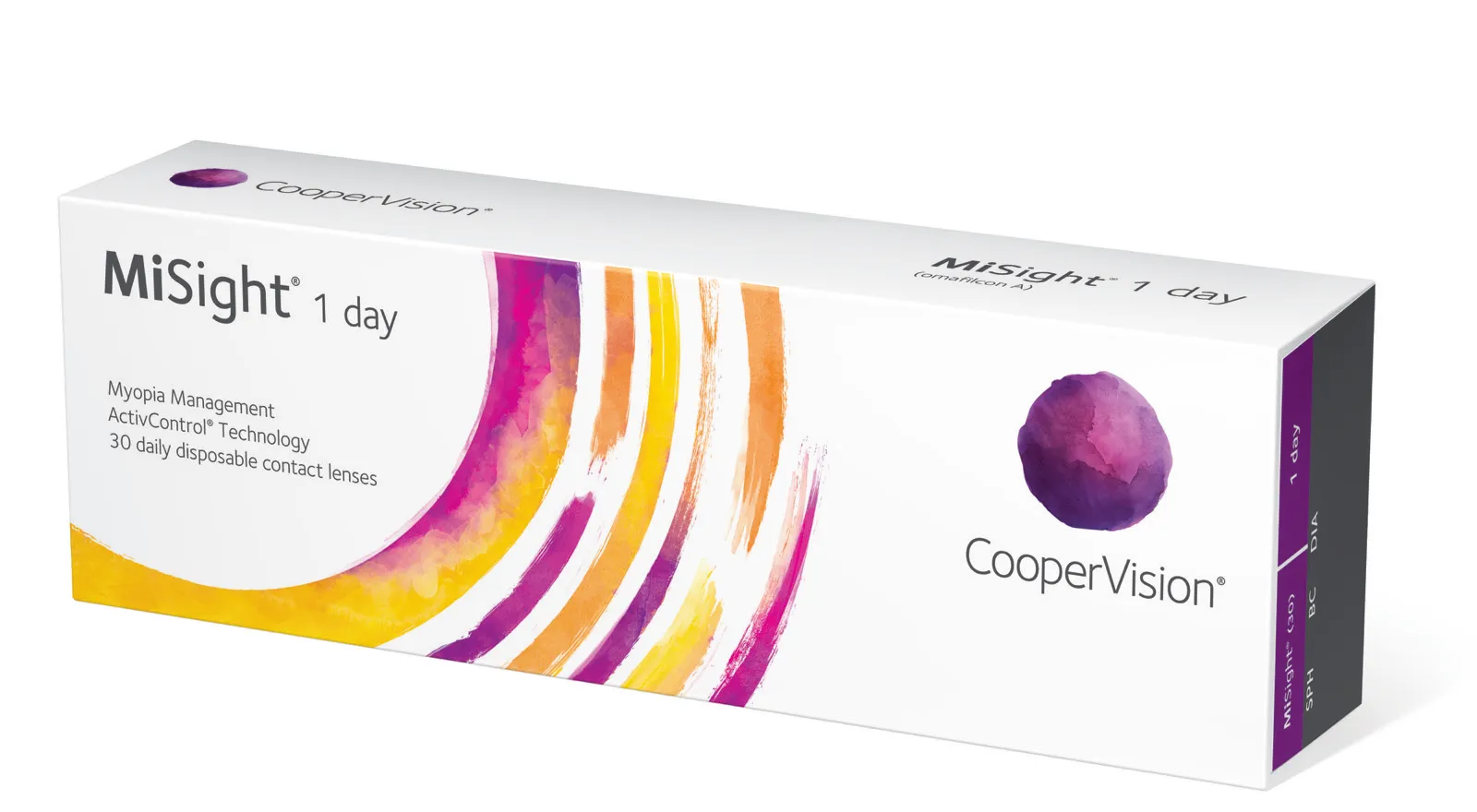
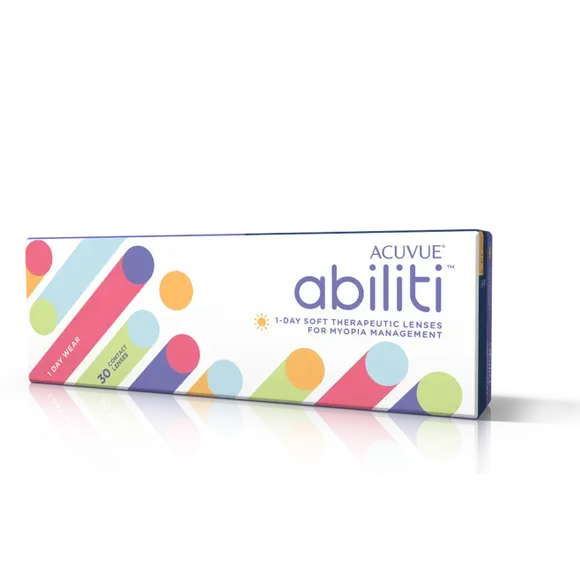
MiSight 1 Day & Abiliti 1 Day contact lenses
MiSight (CooperVision) was the first contact lens designed specifically to treat myopia progression in children, and corrects up to -10.00. Abiliti 1 Day (Johnson & Johnson) is newer, TGA-approved since early 2025, and has been genuinely impressive for comfort, oxygen permeability, and UV protection in the patients I've fitted since 2024. I was even featured in Insight News sharing my experience with it.
Very active kids often prefer contacts to glasses for sport, and daily disposables are low-risk when hand hygiene is followed properly. The risk of infection with a daily disposable lens like MiSight is around 1 in 5000: if 5000 children wore contacts for a year, only 1 would be expected to develop an eye infection. Most children aged 8-12 learn insertion and removal easily, usually within 15-20 minutes longer than a teenager would take.
Biofinity Multifocal is another contact lens option worth discussing at your appointment if MiSight or Abiliti 1 Day aren't quite the right fit.
Red light therapy (RLRL, repeated low-level red light)
Repeated low-level red light (RLRL) therapy is an emerging myopia management option I discuss with families alongside the more established treatments above. It won't suit every child, and I'll talk you through whether it's a reasonable fit for your child's age, prescription, and progression rate at your consultation. See this parents' guide to red light therapy for more detail.
Low-dose atropine, NaturalVue & SEED EDOF 1 Day
I can prescribe compounded low-dose atropine (0.01%-0.05%) where appropriate, and I'm one of the few local practitioners experienced with NaturalVue and SEED EDOF 1 Day contact lenses, which extend the prescription range achievable with a daily disposable. Which option is right depends on your child's eyes, lifestyle, and how the family feels about lenses versus glasses versus drops. We'll work through it together.
Not every test is performed at every visit, only what's clinically relevant to you.
How do you track whether it's working?
Axial length measurements give an objective read on treatment efficacy, not just a prescription number. I measure this in-house.
Learn about axial length monitoringLet's take care of your eyes!
By appointment only
Book your eye test with Carina
No referral needed. Medicare rebates apply.